Separasjonsinnstillinger på en potetopptaker: Hvordan nett og omrøring beskytter avlingen
Nøkkelferier
- 42–44 mm is the typical gap between the rods of a web
- 1 to 3 sieving webs are fitted, more on clay soils
- 13% more web area when width grows from 1,500 to 1,700 mm
- 50% damaged tubers were seen in some dry-season cases
Hvorfor det betyr noe
- For bønder
- Adjust the number of webs and the agitation to each field: clay soils need more separation, dry soils need gentler handling.
- For leverandører
- Offer web and intake options matched to soil type; growers compare intake designs and web widths for wet and heavy soils.
60-sekunders sammendrag
The part of a potato harvester that decides crop quality is not the digging unit but the separation behind it. Soil and potatoes land on sieving webs whose rods leave gaps of roughly 42–44 mm; agitators shake the soil through while tubers travel on. Machines carry one to three webs, and clay soils need more webs and more shaking. Web width matters too: a Russian performance analysis calculates that going from 1,500 to 1,700 mm on the first web adds 13% of sieving area. Dry years bring the opposite risk, as tubers strike hard clods; in 2024 some farms recorded damage on up to half of the crop. Growers who prepare their machines for the next season should set webs and agitation for each field and for the weather. The technical figures come from two reference sources, and the chat comparison of roller and open intakes has no measured data behind it.
A potato harvester digs the crop, but the quality of the harvest is decided later. On the sieving webs, the machine separates tubers from soil, clods and plant material. The setup of this part must match the soil. Otherwise, growers lose tubers or damage them.
How separation works
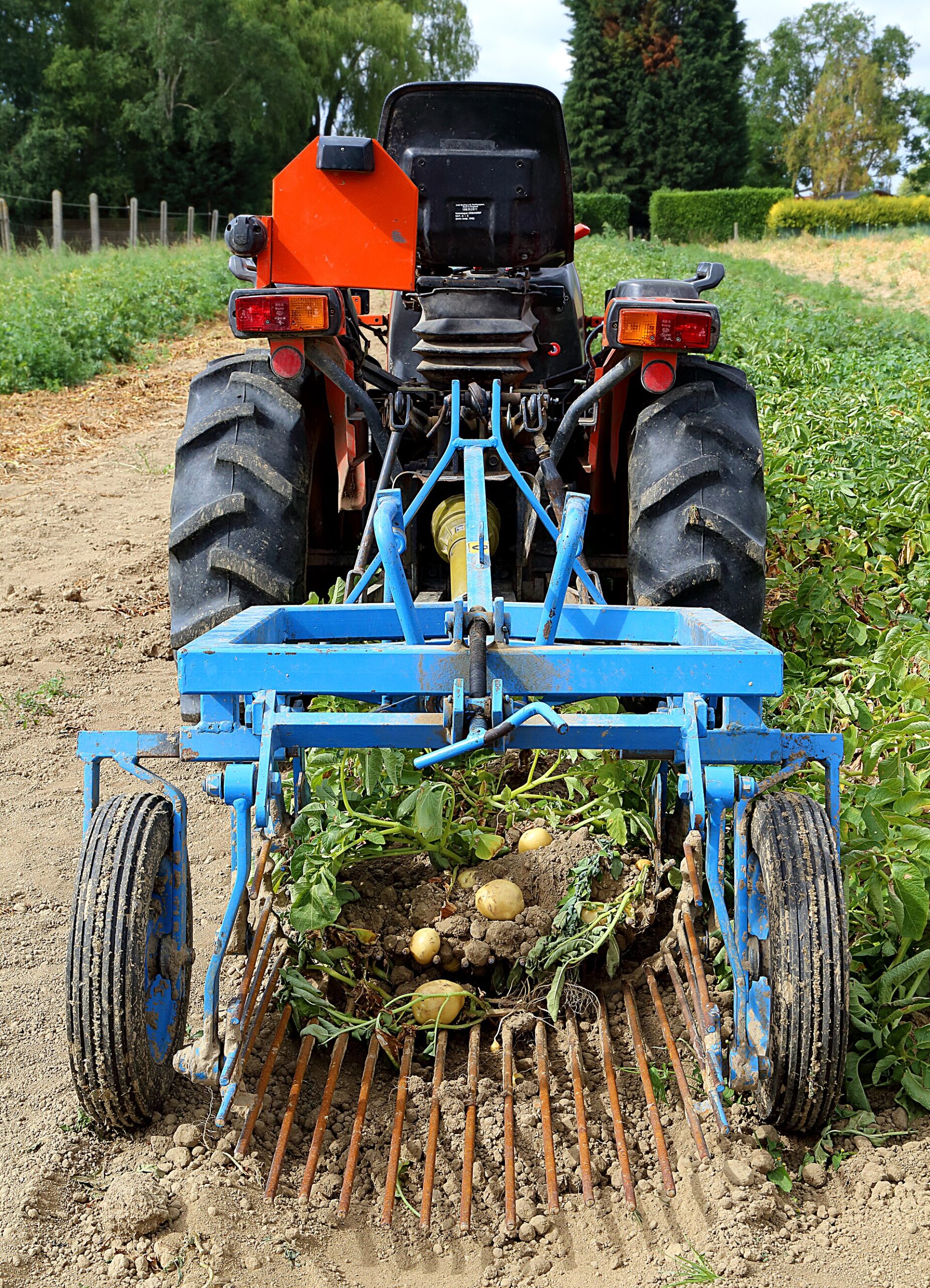
A common intake design uses a diabolo roller and three shares for each row. The shares dig under the ridge and lift soil and potatoes onto the intake web. According to a technical guide on the information site onions-potatoes.com, the gaps between the rods of the web are 42–44 mm wide. Agitators under the web shake the soil through the gaps. The potatoes stay on the web and move on to the next cleaning stage.
Harvesters come with one, two or three webs. According to the same guide, the more clay the soil contains, the more webs and agitation are used to separate soil from potatoes.
Hverdager. Avslutt abonnementet med ett klikk.
Width of the first web
The width of the first sieving web has a strong effect on separation capacity. According to an analysis of harvester performance on the Russian trade site potatosystem.ru, widening the first web from 1,500 mm to 1,700 mm increases its area by 13%. A larger web gives more room for the soil to sieve out before the crop moves on.
Dry seasons also cause damage
Wet soil is not the only problem. In dry conditions, tubers hit hard clods. According to the same Russian analysis, in the dry season of 2024 the share of damaged tubers in some cases reached 50% of the harvest.
In the chat discussion, growers compared intakes with rollers and open intakes for wet and heavy soil. They did not give measured data, so this comparison is not quantified here.
Hvorfor det betyr noe
Losses and damage on the sieving webs reduce the share of marketable potatoes that reach the store. Growers who buy a new harvester or prepare an old one for the next season should match the number of webs, the web width and the agitation to their soil. Settings should be checked field by field and adjusted to the weather, not left at the factory default.
The topic was raised by practitioners in the MAX messenger chat «КАРТОФЕЛЬ И Т.Д. (Potato etc.)», a community of more than 1,100 potato growers and industry specialists. Participants are not named. Join the discussion.
Foto: Potetopphøster på en gård i Herseaux, Belgia (illustrative). Jamain / Wikimedia Commons, CC BY-SA 4.0
Global potetbrief
Topp fem nyheter, priser, sykdomsvarsler og hendelser. Hverdagsmorgener, ingen reklame.
Kilder
- MAX chat «КАРТОФЕЛЬ И Т.Д. (Potato etc.)» — https://max.ru/join/SViX6IyOKuJHB6-xuuepbMbts_zk4eiEYdXUpUWVu28
- Onions-Potatoes.com, Harvesting potatoes with a potato harvester — https://www.onions-potatoes.com/harvest/mechanized/potatoes.php
- potatosystem.ru, Factors affecting the performance of potato harvesters, 18 Aug 2025 — https://potatosystem.ru/faktory-vliyayushhie-na-proizvoditelnost-kartofeleuborochnyh-kombajnov/
- Technical reference sources; the chat discussion is not quantified
Lenket i dette materialet
- Land
- Verden
- Seksjoner
- AGROTEKNOLOGIUtstyr i felthøstingNyheter
Relaterte historier

Sortsvalg er en nitrogenstrategi: Hvorfor noen potetkultivarer trenger mye mindre gjødsel
Slept eller selvgående: Hva avgjør valget av potetopptaker